I’ve been an insomniac my whole life. I remember taking long walks as a teenager around my neighborhood in the little hours, just because I was awake and bored. It was kinda romantic. But as I got older, it became debilitating.
Over the years, I tried every cure for insomnia. Most didn’t work. The only thing that made a dent was CBD, which is half the reason I started the farm. And while it’s helped, my quest for an even better night’s sleep continued.
It was researching hemp that brought me to one of the oldest sleep aids in civilization. Some hemp strains have a terpene called alpha-Bisabolol that is known for sedative, anti-anxiety effects. And that terpene appears in another plant, too.
You know that tea we all associate with bedtime? Ancient people were using it the same way, which is why it’s known as Roman Chamomile. But we have science they didn’t, so now we know its active compound: alpha-Bisabolol.
So I thought, our tinctures are flowers infused in oil. What if we infused hemp and Chamomile flowers together?
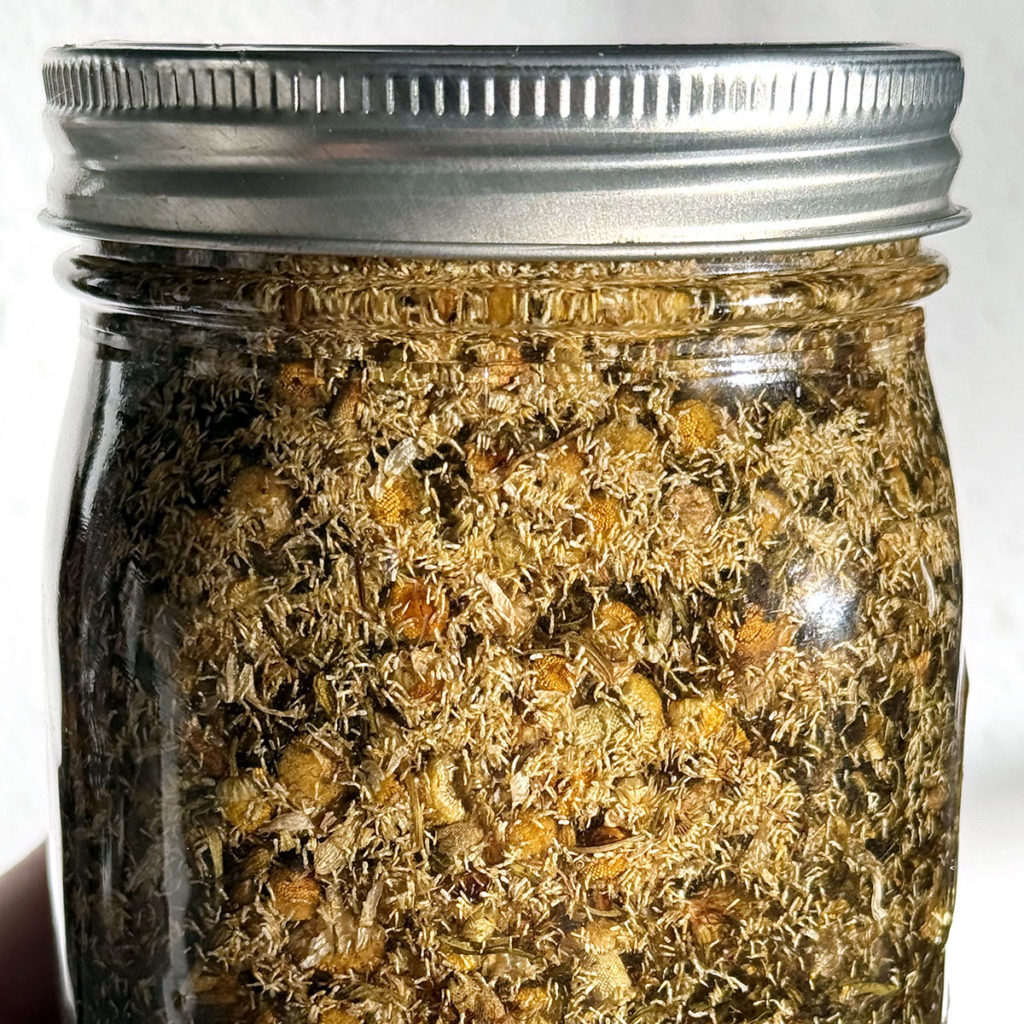
So we took the Oregon Sweetgum hemp flowers that we grew last summer, which contain alpha-Bisabolol and have a sweet flowery taste on their own, and infused them along with organic Chamomile flowers, which come with a ton of the sleepy terpene. I knew it was working when I kept having to take naps after taste testing.
Speaking of the taste, Chamomile gives the tincture a floral honey flavor, in addition to its sedative, anti-inflammatory, and anti-anxiety effects, so it’s our sweetest tincture yet, without adding any sweeteners.
I am so happy with the results and so excited to invite you to try our newest Limited Edition: Sweet Sleep. I hope it helps you as much as it’s helped me.
Today I got to participate in a conversation about Blocking in social spaces with a bunch of smart people including Sydette Harry and Georgia Bullen, organized by Dan Hon for his Hallway Track series. As usual for me in these things, I had way more thoughts than I had time to bring up, so I’m writing a few of them down here.
What is Blocking?
In an online social space, blocking is when one user wants to boot another from their experience. So if I block, say, David Brooks (a worthy block recipient if there ever was one), I should never hear from him again, and he should never see me, either.
But I think it’s a mistake to think of a block as a kind of relationship between two users. That’s impossible because the users don’t have a relationship after the block. Instead, blocking should be considered an agreement between a community member and the site itself. (I’m going to say “site” here but it could also be an app or the community leader or moderation team, etc.)
By blocking David Brooks, I’m telling the site that I don’t want to hear from or see that silly man ever again, and I also want to deny him from hearing from or seeing me. That’s the agreement. It’s between me and the site.
This distinction is important because it answers a lot of followup questions. Should blocked users be omitted from search results? Yes! The site promised. Should a blocked user be able to access my content in some other context on the site? No! Should a blocked user’s content ever be recommended to me? No! These answers are obvious when seen in this light, so it’s amazing how many social sites get this wrong.
What ISN’T blocking?
User-to-user blocking is not an excuse to abdicate your responsibility, as the site creator/leader/manager, to continue to manage your community. Far too many sites implement blocking and then take their hands off the wheel, leaving it to the users to fight among themselves. But that’s bad and wrong. It’s also missing a great opportunity, which I’ll get to in a bit.
So how should blocking work?
When a user is blocking someone, it should be as if they just moved away with no forwarding address. The site should never tell another user that they’ve been blocked (this is also a frequent mistake). When you tell your users that they’re blocking each other, it’s just an invitation to take the abuse to another network.
Abusers take getting blocked as a badge of success. How many times have you seen someone post a screenshot of a “You’re blocked” message posted as some kind of trophy? This is damaging to community health because other people see it and emulate it. It becomes an antisocial goal. Never give the abusers a goal.
One thing that came up in today’s conversation was that there are times when having the negative feedback loop can be important. You might want to tell someone you’ve blocked them. Which is true, sometimes. I’d just add that maybe that feedback should come from a moderator, or in another context. Certainly, there’s nothing stopping anyone from telling someone they’re about to get blocked if they persist in their abuse.
When is a block tool needed?
As much of a proponent of blocking as I am, I think it’s important to remember that blocking isn’t always required for every community system. Small communities with strong barriers to entry don’t always need a block tool. Slack doesn’t have a block tool, for example, because Slacks are closed (not public) and have active administrators. The administrator can block someone by booting them out, but users cannot.
Blocking is required in large, public venues with low barriers to entry. Basically, the easier it is to get in and annoy someone, the more tools your users will need to manage each other.
The big missed opportunity.
The idea of gamifying blocking came up (because anything that involves groups of humans can become a game) and I was adamant that, of course, you should not gamify blocking for the users. But you, as the site admin, should absolutely gamify blocking for yourself and your moderators.
Here’s what I mean: when a user blocks another user, that’s an important signal. If you watch to see who the most-blocked users are, that’s a goldmine of insight into how your users are behaving, and you should absolutely monitor who is getting blocked a lot today. It just shouldn’t be visible to users.
This doesn’t mean that you must act on every highly-blocked user. But it does mean something’s going on with them. Maybe they’re having a bad day, or maybe they’re getting dogpiled. Maybe they need a timeout, or maybe they need a moderator to reach out and see if they’re okay. This is where good old fashioned human community management comes in.
But either way, you have to watch who is getting blocked and take action when needed. I’m amazed that more sites don’t do this.
But isn’t blocking kind of brute force?
Yes, and this is where the real work is. In many cases, block is the only tool offered to users to manage their experience, and that sucks, because blocking is a baseball bat, and community management needs a more nuanced toolset.
So how should things change?
First, we barely teach new users how to use the tools they have. Most onboarding experiences don’t even mention block, what it does, or when you might need it, because we don’t want to scare users on their first day, but we have to teach them sometime, ideally before they’re receiving harassment.
Next, we never give users the ability to tell each other what kind of interactions they want. Some users may not want replies at all! Some might be there just to talk to the people they already know. Some might just be there to shitpost and they welcome all interactions. All of these users appear exactly the same. We could head off a lot of problems by just giving users a way to say “here’s what I’m here for, here’s what I do and don’t want.” Most people would respect it! And the ones that don’t, well, that’s what block is for.
Users should have tools to remove content from their view without blocking. Sometimes blocking is the only way to get an algorithm to stop recommending someone’s content to you. I’ve personally blocked people on TikTok not because they’re bad in any way, just because the algorithm overwhelmed me with their content, and a block was the only way to tell TikTok to stop. This is bad! There should be ways to say “little less of this, please” without having to block someone, but we don’t have tools for that.
Blocks are usually expected to be permanent, which is also kind of a bummer. We need ways to say “that’s enough from you today” without severing the connection forever. If we had more ways to limit our input, we could create more pro-social experiences.
And finally, getting blocked by a stranger is one thing, but getting blocked by a friend really stings. How can we create tools that understand and respect existing relationships?
There’s so much work to be done here. The more we congregate online, the more we need to demand humanistic, pro-social tools.
I’ve been writing about social media since it was called virtual community, and in that time, the most common metaphor I’ve used is gardening. It’s a good metaphor, because it demands a delineation between what you want to grow and what you don’t, and it emphasizes nurturance, perhaps the most important quality of a community manager.
But it’s almost 2023 now. The world is different, the online world is very different, and I’m pushing 50. So I think it’s time we all start talking about online gathering places with a more apt metaphor: bars.
(When I say “community” here, I mean a place online where people can talk to each other. Nothing more, nothing less. We can go deep on the nuances of community another time.)
Loud and Stupid
The most obvious way an online community is like a bar is that bars serve alcohol, and alcohol makes people loud and stupid. It actually depresses your hearing, so you can’t hear yourself talk as well, so you speak louder. And a room full of people speaking louder means a very boisterous room. And of course, alcohol reduces inhibition, so you say things you might not usually say.
The parallels to online behavior are easy to see. Online, people are much more willing to type things that they’d never say in person. How many times have we found out the hard way that a celebrity really cannot handle having a Twitter account? Drunk on the feedback loop, they can be goaded into saying more and more extreme things.
In a virtual space, when everyone is being noisy, you have to be even louder to get noticed. This is what leads to the loudest, most aggressive people gaining the most attention online.
Online or off, you have to speak above the din just to be heard, and that inevitably coarsens the conversation. Which brings us to the people there to protect us from the loud and stupid.
Bars Have Bartenders
Bartenders are the original community managers. In addition to knowing how to make drinks, they’re the person who can listen kindly when there’s no one else to talk to. They’re also the person who’ll clock the problem patrons the moment they walk through the door.
In the 25 years I’ve been studying communities, the most depressing part is that people still start communities (social apps, sites, any company that lets people talk to each other) without thinking through who, exactly, is going to manage the community and how. But it would be ridiculous to start a bar without a bartender.
And bartenders are not alone! A successful bar will need a whole staff. Servers, hosts, busboys, cooks, cleaners, bouncers. Especially bouncers! We’re nearly 30 years into the web and people are still starting community sites thinking they can just outsource all the messy people stuff to AI or poorly paid contractors, often in other countries.
And there’s one more thing all those employees are responsible for.
Living With The Law
Bars are subject to a heinously complex mesh of laws. City, county, state, and federal, not to mention departments of health and safety. And those laws will be vastly different from city to city, state to state, country to country.
Bars are responsible for serving only so much alcohol per drink, not serving someone too intoxicated, not serving to anyone below a certain age. Keeping track of every drop of alcohol. And if they break any of these laws, they can be shut down permanently, owners can lose their license, people can go to jail. Why? Because alcohol is dangerous. With Facebook inciting genocide in Myanmar, mass shooters in America being radicalized online, the January 6 insurrection that was planned online, and nazis reinstated on Twitter, can anyone still claim that poorly managed social spaces are any less dangerous?
The first thirty years of the web may have been an orgy of unregulated expansion, but that era is over. The EU has been a leader with the GDPR, but there’s more coming. And I’m glad. The big players have had plenty of time to get their shit together and they haven’t. It’s time to regulate them as much as we regulate a shot of bourbon.
Communities Are Diverse
I’ve been talking about the commonalities among bars, but it’s just as important to talk about the differences. There’s a bar for everyone. Fancy bars and dive bars. Gay bars and sports bars and gay sports bars. Neighborhood bars where you can walk in, and private bars that require a membership. There are bars where men have to wear suits, and bars that will cut your tie off and hang it from the ceiling. Besides the booze, bars may not have anything in common at all. And some bars don’t even serve booze.
The important part is, each bar cultivates its own culture and you can’t walk in to a bar and expect it to be like every other bar you’ve ever been in. And the bars themselves come up with ways to differentiate themselves and reinforce these differences, some overt and some subtle.
In the same way, community spaces online should be true to themselves. Not every community has to be for everybody. What a failure of imagination it is to think that all community spaces should look and act the same. The next Twitter, whatever it is, shouldn’t look or act like Twitter. You’d never take the entire population of the world and try to stuff them inside one bar, yet somehow Facebook thinks that everyone should be on Facebook. That’s just not how communities work.
Mastodon has its problems, but its core design is built for this idea of lots of bars, each with their own bartender, their own quirks, and their own rules. And the expanding “Fediverse” – a network of sites/apps connected by the ActivityPub protocol of which Masdtodon is a part – is also a good example of how we should be building lots of bars with their own communities instead of trying to stuff everyone into one giant blue bubbled mess. But all of this can be built on the open web, too. It just requires community creators be honest about who their bar is for and who it’s not, and then develop ways to keep true to that mission.
The Money Part
There’s one final reason I’ve started using bars as my go-to metaphor for communities instead of gardens: money. Gardens are wonderful. I’m a gardener and it’s influenced the way I think about my relationships and my life. It’s taught me patience and nurturance. But it costs money and gardeners don’t like talking about that part.
But bars are businesses from the outset. It’s not a surprise that a bar charges money, it’s expected. We have to start thinking about online communities the same way.
All those necessary employees I mentioned earlier cost money. Servers and software cost money. When we go into online communities expecting them to be free, we become the product that gets sold to advertisers and data brokers. The money has to be made somewhere. If we paid for our online communities, they might finally treat us, and our experiences, as valuable. We might finally get to be the customers, instead of the products.
The big problem with the garden metaphor is that it treats the community members as a crop that just grows, like a natural resource. To quote Utah Phillips, “Have you seen what they do to valuable natural resources? Have you seen a strip mine? Have you seen a clear cut in the forest? Have you seen a polluted river? Don’t ever let them call you a valuable natural resource!” Social media sites have been strip mining us for long enough.
Maybe it’s time we grow out of the idealism of the first 30 years of the web and start looking at what we’re really doing online with each other. It’s not always healthy, but we do it anyway. It’s something that adults do because we have a deep need to gather and talk, but we can’t include everyone all the time. And maybe sometimes it gets too loud, but we still wanna be mostly safe when we do it.
Online communities are bars and we should admit that and start building the diverse, engaging, and safe gathering places we deserve.
In my community consulting work, I’ve often had to remind clients that their products, while important, are not governments.
I can almost understand the confusion. Community systems create a kind of governance. There are rules for what members can do and procedures for when those rules are broken. Sometimes there are even appeals processes. If you squint, the whole thing can take on the shape of a rudimentary justice system.
The government-thinking has a secondary appeal to executive teams. If their site is a country, that makes them the ruling class. It makes the CEO the president (or dictator). And again, squinting, it can kind of feel that way. Running a company, like managing a community, is literally a power trip. You can do things your members can’t, including punishing those members. Power, even tiny power, can be addictive.
But it’s not true. None of it. Your product is not a country. You are not a government. Your CEO is not a president. And, worse, thinking that way is damaging to the community, disastrous for the company, and may just be ruining the world.
Governments Aren’t Optional
I am a citizen of the United States. I became that by simply being born here (unlike my dad, but that’s another story). I did not have a choice in the matter.
But I can choose whether I’m a member of Facebook or not. I can decide to delete my Twitter account. (Every day I get a little closer.) No matter how important these sites become, they’re still optional. Nobody has to participate in them.
When the leaders of these sites fall into the trap of thinking of themselves as governments, they forget their people can simply up and leave if they get angry. They become callous to member complaints and arrogant enough to think they can mistreat their communities without repercussions.
But these sites come and go (just ask Tom from Myspace). Mark and Jack could use a little humility, and part of that is remembering that you’re not a sovereign ruler, you’re just another temporary caretaker of a precious commons.
Governments Give Rights
If you work in community management, there are two words that probably make you twitch: “free speech.” Because every time you’ve had to remove content for some reason, someone somewhere used those words in an angry response.
But here’s the thing: “free speech” is guaranteed by governments. (And not even all governments! We’ve got our First Amendment here, and Canada has something similar, but after that it gets a lot sketchy.) Free speech means you have the right to speak. In your life. In general. It does not mean you can say whatever you want, wherever you want.
You can’t yell “fire” in a crowded theater. You can’t post the phrase “I’m going to,” followed by a word that rhymes with “thrill,” followed by “the president,” pretty much anywhere. (No joke, I was once subpoenaed by the Secret Service because I was the admin of a community site where someone posted something they interpreted as a threat.) You can’t post photos of federal facilities online. You can’t post illegal content (child porn) or copyrighted content.
Point is, speech has limits, online and off. So limiting speech online, in a community run by a private company, is not a violation of the First Amendment, no matter how important the site is.
A government can censor you, a private company cannot. So it matters which one you are. If the CEO of a huge community company is under the delusion that they’re the president of a country, they may think they have to allow hate speech because that’s what countries do. But that’s wrong. And it leads to inaction when the community is being attacked by bad actors.
Countries guarantee free speech. Your site is not a country. There is no guarantee of free speech on your site or any site, unless a government made it, which, again, is not you.
Governments Have Responsibilities
Finally, I try to remind executive teams that, even though it can be kind of thrilling to imagine yourselves as the ruling council of a great country, you really do not want that. Because governments have responsibilities.
Transparency is good when you’re a government. It’s even required in a lot of cases. Every vote tallied, every memo recorded. As CEO, you want all your emails to be public property? You want to be subject to elections every four years? (Maybe some of us would like that, but I know the CEOs wouldn’t.)
But transparency is not required for companies. And while many people think they should be more transparent, and maybe sometimes they should, there are some really good reasons not to be. Spelling out exactly what actions are taken for what rule-breaking gives the rule-breakers the tools they need to get away with it better. Think of all Google has to do to stay ahead of the people trying to game their search algorithm. That opaqueness keeps their results good for us. Opaqueness is valuable sometimes.
Governments are slow moving on purpose. You want to have your hands tied up in red tape? You want to have to do a long term study before rolling out a new feature? (Again, maybe we should.)
But, no, CEOs and executive teams prize their independence, privacy, and fleet footedness. So if you don’t want to subject yourself to the rules and responsibilities of governments, don’t pretend you are one.
–
Thinking of your site as a country, and yourself as a government, is seductive. It feels good. But it leads companies to make bad decisions for the wrong reasons, and we all suffer as a result.
Mark was so busy running Facebook like an empire, he didn’t notice when Russians used it to disrupt the 2016 US election. And in his confused effort to rationalize his community management inaction, he defended Holocaust denial, which is hate speech.
Twitter is now working so hard to protect the “free speech” of Alex Jones that it’s allowing him to use the platform to promote hate, libel innocent people, and poison the entire community. In his effort to appear presidential, Jack has condoned bigotry on the platform, which opens the door to a legion of smaller bigots to come in and harass everyone else with the blessing of the CEO.
It’s time for these guys to stop playing pretend politics and admit that they’re not presidents, their sites are not countries, and we are not their citizens. They are caretakers of communities and they’d better start acting like it or they won’t have anyone to rule anymore.
Let’s start from the beginning. Say you make a website that allows people to say something online. Most people use it like you intended, and everything’s fine.
If you’re exceptionally lucky, more people start to use your site. In fact, enough people use it that they begin to feel a kinship with each other.
Congratulations, you’ve got a community.
Because communities are made of people, and people are hopelessly, ridiculously complicated, eventually, inevitably, someone uses your site in a way you hadn’t expected, to say something terrible. So you remove that one thing.
Congratulations, you’re a community manager.
Again, you’re very lucky. The community grows. And grows. And soon there’s a lot of community management work to do. So you hire some people. And the first thing they ask is, but is this allowed? What about this other thing? And you realize that your community members have been asking those same questions.
So you write some things down. Rules. Community guidelines. Terms of service. And you think, I probably should have written these things down earlier. But it’s done now, so everything’s fine.
But then the community grows more and something truly frightening happens. Because you’ve been successful, because your community is so large, the community itself becomes a target. The bad actors arrive. The trolls, grifters, and criminals. They’re all coming because that’s where their victims, marks, and targets are. Because that’s where everybody is.
Congratulations, you’ve got a problem.
The community you started with optimism and naïveté is now a battleground. People get hurt feelings, but you can wave that away with idealistic platitudes about free speech. Then people get killed in SWATtings and broadcast their suicides, but you can just claim those are a few bad eggs.
And then you leak private data to Russians. And then you help elect Donald Trump. And then you get called in front of congress.
Congratulations, you’ve got a big fucking problem.
—
I’m old enough to remember when search engines were dumb. Alta Vista, HotBot, Lycos, Web Crawler. Names nobody remembers anymore. They were dumb because all they did was crawl the web and make indexes. Lists of which words appeared on which pages. So you’d type in a word and you’d get a list of pages that included that word. This was exciting at the time.
But it was dumb because knowing that a page included a word didn’t necessarily mean that page was about that word, or even necessarily good for that topic. And, worse, the people making the pages quickly learned that could just use a word a lot and get found that way. After all, a page that uses the word “dog” 400 times must really be about dogs, right?
The reason you “Google” things now and not “Alta Vista” them is because Google was the first company to really nail search results. And they did that with something they called PageRank. They made the usual index of which pages included which words, but then they made another list of which pages got linked to a lot, and used that linking behavior as a trust metric. So if a page got linked to a lot using the word “dog,” then it was a pretty good result for a search for “dog.”
This PageRank thing, they told us, was an “algorithm.” And, for a time, algorithms were all the rage. We were living in the age of the algorithm. And in all my client meetings and project plans, every time we had a decision to make, someone would say, “the algorithm will do it.”
The algorithm never did it.
—
When Facebook CEO Mark Zuckerberg testified in front of Congress on April 10, 2018, he was pressed repeatedly on what Facebook was doing to combat the rising tide of terribleness on his platform. And every time his answer was AI. He said it 25 times in one sitting.
So what’s AI? When you say “Artificial Intelligence” to a normal person, they probably think of a sentient robot. Star Trek’s Data. Star Wars’ C-3P0. It’s a romantic, futuristic notion. And totally wrong.
In the context of community moderation, all “AI” means is: teach a computer to do something so it can do it faster than you can. AI is the new algorithm – another way to avoid human responsibility.
If you want to see how meaningless the term “AI” is, just replace it with “recipe” when you see it.
SENATOR: How will you prevent abuse?
CEO: We will use a recipe.
SENATOR: A recipe? For what? What’s in the recipe? What does it do? Who’s making the recipe? How will it help?
CEO: That’s right! A RECIPE.
AI is just computers doing what they do. It’s not a solution to everything. And if we’re using it to avoid making hard decisions, then it’s part of the problem.
—
When technologists talk about AI, I think what they’re really talking about is machine learning, which is pretty cool and not nearly as new as people think it is. It’s been around since the 1960s. It just goes faster now because computers go faster.
Machine learning, at its simplest, it’s taking a pile of data, calling it a thing, and asking the computer to find more things like that. It’s pattern matching and computers are good at that.
Imagine you’re running an email system and you really need to help your users avoid spam. So you make a pile of spam messages and say, hey computer, this is spam. And the computer scans all that data and finds patterns in it. Then, when new messages come in, it can take a guess at how closely they match that pattern. This happens now, every second of every day, and every time you mark a message as spam, you’re adding to the pile and helping train the system.
What’s interesting about machine learning is that it requires you give the computer examples, but allows you to skip defining it. You can just let the computer find the similarities in the data. That works for something as simple as spam vs not-spam, or photos of faces vs photos of not-faces.
In his senate testimony, Zuckerberg claimed that internal “AI tools” at Facebook are already deployed against terrorist content. He said: “99 percent of the ISIS and Al Qaida content that we take down on Facebook, our AI systems flag before any human sees it.”
Even though this is unprovable (“trust us, we’re removing bad stuff before you see it 99% of the time!”), I don’t doubt it. Because terrorist content, like spam, is relatively easy to define, target, and remove. It’s identifiable because it includes telltale phrases, signifiers, and comes from known bad actors.
The trouble with taking this technique and applying it to general community management is that we are too messy, too inconsistent, too prone to human weirdness.
—
Anyone who’s ever managed a community knows how complicated people are. A reasonable community member can suddenly have a bad day. Sometimes things that look like bad contributions are honest mistakes. Other times things that look reasonable to a bystander are known to be abusive to the sender and recipient. (Nazis are using milk as a hate symbol. MILK.) When one person tells another to die on Twitter, it’s a threat. But when David Simon says it, he’s making a point. Abusers can use liking to remind their victims that they’re watching. And abuse isn’t limited to one system – just ask Kelly Marie Tran. Point is, we’re complicated critters.
Of course humans need tools to help manage community. I’ve built systems to do this. And, sure, machine learning can be part of that. But I fear the leaders of Twitter and Facebook are depending too much on technology (again), and overlooking the kinds of systems that are great at this kind of empathetic flexible pattern recognition: humans.
They’re also overlooking the reason they’re in this predicament in the first place: unfettered growth, design that encourages immediate engagement over thoughtfulness, and a general unwillingness to define and communicate who and what their platforms are for. Thus far, they’ve been for everyone and everything. It’s time to rethink that. While there’s a community for everyone, not everyone is welcome in every community, and that’s okay. That’s how communities work. And when the “everything” that your community is for includes destroying human lives and American democracy, it’s time to raise your standards.
You can’t create a system for everyone, where everything goes, not communicate the rules, not design for community, and then say it’s just too hard to protect everyone. This end state is the outcome of all of those decisions. And AI is not going to be the patch that fixes all the bugs.
—
AI is not a community management strategy because it’s skipping the hard part of community management: deciding what’s allowed and what’s not. You can’t skip the definition step in community management because that’s literally the very first thing you have to do, and the thing that only you can do. You can’t just give a pile of bad stuff to the computer and say “you figure it out.” That’s just outsourcing your responsibility.
You have to do the hard part. You have to decide what your platform is for and what it’s not for. And, yeah, that means deciding who it’s for and who it’s not for (hint: it’s not bots, nor nazis). That’s not a job you can outsource. The tech won’t do it for you. Not just because it’s your job, but because outsourcing it won’t work. It never does.
Call it “AI” or “machine learning” or “the algorithm” or whatever you like, but it’s really an abdication of your duty to care for the community that depends on you. And these days, that community is all of us, our fragile democracy, and possibly the stability of the world in general.